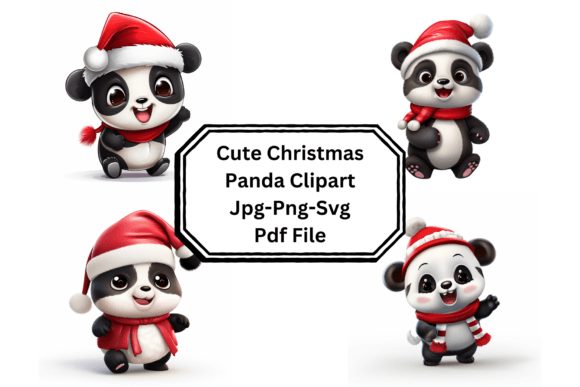
Cute Christmas Panda Clipart: Festive Illustrations
As a brand designer and content marketer, I approach every seasonal asset with a critical eye. It is not enough for an image to be "cute"; it must serve a strategic purpose within a broader visual narrative. When I first opened the files for Cute Christmas Panda Clipart, my immediate impression was one of warmth and approachability. In the crowded landscape of holiday marketing, where red and green often clash in chaotic ways, these Illustrations offer a refreshing sense of calm and whimsy. The mood they create is distinctly friendly, making them an ideal choice for brands that rely on emotional connection rather than corporate stiffness.
Setting the Tone for Seasonal Brand Communication
The primary value of this graphic design asset lies in its ability to humanize a brand. For small business owners and online coaches, the holiday season is a crucial time to deepen relationships with their audience. The panda motif inherently suggests playfulness and gentleness. When integrated into a campaign, it signals to the viewer that the brand is accessible and cares about bringing joy. This emotional tone is perfect for lifestyle content, handmade product promotions, and community-focused event flyers. However, for premium luxury brands or highly formal corporate entities, one must proceed with caution. While the design is professional, its casual nature might dilute an image of exclusivity if not paired with sophisticated typography and ample white space.
Integrating Assets into a Real-World Marketing Campaign
To test the versatility of Cute Christmas Panda Clipart, I imagined a real-world scenario: a boutique skincare line launching a limited-edition "Winter Glow" gift set. The goal was to create a cohesive content kit that included social media graphics, email banners, and packaging inserts. Here is how these Illustrations performed across various touchpoints:
- Social Media Graphics: On Instagram and Pinterest, the clipart acted as a perfect focal point. The clean lines of the PNG design allowed it to stand out against pastel backgrounds, driving higher engagement on posts announcing the launch.
- Packaging Design: For the product label and box inserts, the asset added a delightful surprise element. It transformed a standard package into a memorable unboxing experience, fostering stronger recognition and audience trust.
- Email Banners: In header images, the panda provided a clear visual hierarchy, drawing the eye immediately to the holiday offer without competing with the call-to-action text.
- Digital Ads: For Facebook and digital ads, the character served as a friendly mascot, making the ad feel less like a sales pitch and more like a seasonal greeting.
Enhancing Visual Hierarchy and Audience Perception
A common mistake in content marketing is cluttering designs with too many elements. One of the strengths of this creative design is its simplicity. It supports marketing goals by providing a strong first impression without creating visual noise. When used in hero graphics or campaign headers, it anchors the layout effectively. The asset helps establish a consistent branding voice, ensuring that whether a customer sees a blog graphic or a printable promotion, the visual language remains unified. This consistency is vital for building audience trust; it tells the consumer that the brand is attentive to detail and professional in its presentation.
Strategic Placement and Design Limitations
While Cute Christmas Panda Clipart is versatile, it is not a one-size-fits-all solution. There are specific contexts where this asset should be used carefully. In dense information layouts, such as detailed infographics or text-heavy ads, the illustration might get lost or distract from the core message. Similarly, on low-contrast backgrounds, the lighter tones of the panda could disappear, reducing readability. For overly minimal brands that rely strictly on typography, adding a character might feel disjointed unless the font choice bridges the gap effectively.
Furthermore, when designing for small mobile graphics, one must ensure the details of the SVG design or high-resolution PNG remain crisp. If the image is scaled down too far, the expressive features of the panda may become muddy, undermining the professional appearance of the ad.
Practical Notes for Designers and Content Creators
Before deploying this graphic design asset in a paid campaign or client work, I recommend a rigorous testing phase. Here are my top notes for maximizing the potential of these Illustrations:
- Color Palette Testing: Do not assume the default colors will work. Test the clipart against your specific brand color palette. It often pairs beautifully with soft creams, sage greens, and deep navies, creating a modern design aesthetic.
- Typography Pairing: Experiment with different font styles. A handwritten font can enhance the playful vibe, while a clean sans serif font keeps the look contemporary. Avoid overly ornate script fonts that might compete with the details of the panda.
- Mockup Integration: Always place the asset inside real campaign mockups. See how it looks on a physical product label versus a digital screen to ensure scalability.
- Commercial Licensing: Crucially, confirm the commercial license terms. Whether you are creating a Canva template for sale or designing packaging for a physical product, understanding the rights associated with the design bundle is essential to avoid legal issues.
- Competitor Analysis: Compare the asset against competitor visuals. If every other brand in your niche is using generic snowflakes, this unique panda illustration can be the differentiator that makes your content memorable.
Final Verdict on Creative Value
In the realm of digital products and content creation, finding an asset that balances charm with utility is rare. Cute Christmas Panda Clipart succeeds because it offers more than just a pretty picture; it offers a storytelling tool. For creative entrepreneurs, digital sellers, and social media managers, it provides a ready-made way to inject personality into editorial design, web design, and promotional materials. When used with intention and strategic spacing, it elevates the perceived value of the content, turning a simple holiday post into a branded experience that resonates with audiences long after the season ends.