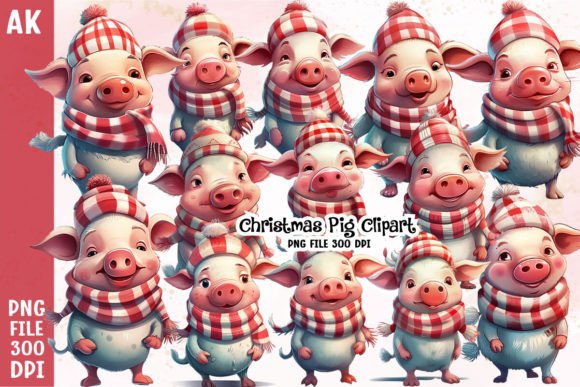
Review: Christmas Pig Sublimation Clipart for Embroidery
As a designer who spends more time staring at stitch maps than most people spend on their phones, I approach new assets with a healthy dose of skepticism. We've all been there: you download a cute graphic, digitize it or buy the file, and then realize halfway through the run that the details are too tight for the fabric or the theme feels off. That is exactly why I took a close look at the Christmas Pig Sublimation Clipart before committing it to a real-world project. This isn't just about whether the image is "cute"; it is about whether this specific illustration holds up under the needle and thread of a commercial embroidery machine.
My first impression of the Christmas Pig Sublimation Clipart was that it strikes a delightful balance between whimsical and structured. In the world of Illustrations, holiday characters can often lean too hard into clutter or become so simplified they lose personality. This design, however, has a visual weight that suggests it would translate beautifully into a machine embroidery design. The lines appear clean, and the composition feels intentional, which is crucial when you are converting raster art into vector paths for stitching. It creates a mood of cozy, rustic holiday cheer without feeling dated or overly childish.
Real-World Application: The Holiday Tote Test
To truly evaluate this asset, I envisioned a specific scenario that many of us face every December: a rush order for custom holiday gifts. Let's say a local boutique needs a run of twenty canvas tote bag design units for a "Ugly Sweater" party giveaway. They want something unique that isn't just another snowflake or reindeer. This is where the Christmas Pig Sublimation Clipart shines. Pigs are trending in farmhouse decor, and combining that with Christmas elements offers a fresh twist.
If I were digitizing this myself or purchasing the corresponding embroidery file, I would immediately picture it centered on a natural linen or heavy cotton tote. The shape of the pig allows for a solid fill stitch body, which provides great coverage on textured fabrics. For the festive accessories on the pig—perhaps a scarf or a hat—I would opt for a satin stitch to give those areas a premium, raised look that catches the light. This contrast in stitch types adds depth to the finished product, making it look like a high-end boutique item rather than a mass-produced craft fair good.
Beyond totes, this design has serious potential for sweatshirt embroidery. Imagine a heather grey crewneck with this design stitched in traditional reds and greens on the left chest or as a larger back piece. For baby embroidery projects, like a onesie for a "first Christmas," the soft curves of the pig illustration are perfect. They avoid the sharp, aggressive angles that can sometimes irritate sensitive skin or pucker delicate knits. As an Etsy seller, offering this as a personalized option where you add the baby's name in a complementary script below the pig could significantly boost your average order value.
Navigating Technical Challenges and Fabric Choices
However, no design is universal, and practical judgment requires knowing where to draw the line. While the Christmas Pig Sublimation Clipart is versatile, there are scenarios where caution is necessary. If you are working with very small hoop size constraints, such as on a cap or a small pocket, you must scrutinize the level of detail. Sublimation clipart often relies on gradients and fine lines that do not always survive the translation to thread. If the original image has tiny details in the pig's eyes or snout, these might need to be simplified during the digitizing process to prevent thread breaks or bird nesting.
Fabric texture is another critical variable. On a smooth polo shirt, the design will look crisp. But on a highly textured towel or a fuzzy fleece blanket, a dense stitch density might cause the design to sink in or become muddy. In these cases, I recommend using an applique design approach. You could use the clipart as a template to cut out felt or wool shapes, then stitch around them with a running stitch or wide satin border. This not only solves the visibility issue on textured fabrics but also adds a tactile element that customers love in handmade product lines.
Dark fabrics present their own challenge. Since this is sublimation clipart, it likely assumes a light background. If you are stitching this onto a navy blue custom apparel item, you cannot rely on the white of the fabric to show through. You will need to ensure your digitized version includes a solid underlay and uses bright, opaque thread colors to make the pig pop. Testing the design in a black-and-white mockup before stitching is a smart move to check contrast levels.
Enhancing Brand Value and Customer Trust
From a business perspective, the choice of imagery directly impacts perceived value. Using a generic, low-quality graphic can make your craft business look amateurish. Conversely, a well-executed design like this Christmas Pig Sublimation Clipart signals professionalism. When a customer receives a pillow cover or kitchen towel with a clear, well-stitched design, it builds trust. They see that you care about the details, which encourages repeat business and positive reviews.
For those selling digital embroidery file assets, the versatility of this illustration is a major selling point. It fits seamlessly into collections focused on holiday embroidery, farm themes, or cute animal motifs. However, before listing it as a design asset or using it in commercial embroidery projects, you must verify the licensing terms. Just because an image is available for sublimation does not automatically grant rights for digital resale or unlimited physical production. Always confirm whether the license covers finished goods, digital files, or both to protect your small shop product line from legal issues.
Final Designer Notes for Success
Before you commit to a full production run, here are my top recommendations for working with this specific style of artwork:
- Test on Scrap First: Always stitch out the design on the exact same fabric and stabilizer combination you plan to use for the final job. What looks good on muslin might behave differently on twill.
- Check Stabilizer Needs: Given the likely density of a character design, using a cut-away stabilizer is often safer than tear-away, especially for items that will be washed frequently like tea towels or aprons.
- Simplify if Necessary: If the sublimation source has complex shading, don't try to replicate every gradient with thread. Simplify the color blocks to keep the embroidery project clean and readable from a distance.
- Consider the Hoop: Ensure the design fits comfortably within your hoop without needing excessive re-hooping, which can lead to alignment issues on curved surfaces like caps.
- Thread Contrast: Play with metallic threads for the holiday elements (like bells or stars on the pig) to add a festive sparkle that elevates the personalized gift appeal.
In conclusion, the Christmas Pig Sublimation Clipart is a strong contender for your holiday catalog. It offers a charming aesthetic that resonates with current trends while providing enough structural integrity to work well as an embroidered patch or direct garment decoration. With careful attention to digitizing nuances and fabric selection, this design can help you create standout printable mockup previews and tangible products that delight your customers. It is a reminder that with the right preparation, even a simple illustration can become the star of your seasonal collection.